By; Jerome-Mario Utomi
According to Wikipedia, the world information search engine, from 23 to 25 December 2023, a series of armed attacks occurred in Plateau State, Nigeria. They targeted 20 rural communities in Bokkos and Barkin Ladi local government areas, resulting in 160 deaths, 300 injuries, and significant property damage.
Also painful but relevant to the discourse, in the opinion of this piece is the awareness that this is neither the first nor the second that this style of man’s inhumanity to man is occurring in the once peaceful plateau state. Further exacerbating the confusion is the fact that each time it occurs, it leaves in its trail tears, sorrows and blood.
Essentially, even though condemnation have, as the usual ‘tradition’ greeted the coordinated attacks on 23 villages, the emotional and psychological burden of these occurrences on our republic have not only contributed to a legacy of unresolved trauma, pain, and injustice for the affected communities, but increasingly postured Nigeria as a nation reputed for having neither value nor respect for human lives.
Aside from the litany of thoughtless human massacres across the country and tribes by state and non-state actors in the past which has made imperatives redress, healing and reconciliation for such heinous acts indispensable to achieving a true national rebirth as no nation enjoys durable peace without justice and stability, fairness and equity. Also standing as impediment to true national healing and rebirth is the argument by some commentators that the only remedy for this problem is simply to encourage the affected community to accept the fate and move on with their lives as there are more important matters confronting the nation coupled with the fact that, across the world, such incidents forms part of human existential voyage and therefore unavoidable.
While this slanted reasoning may be allowed to fly on the faces of the people, this piece believed and still believes that there are reasons as to why President Bola Ahmed Tinubu led Federal Government must not allow the present killing in Plateau state go without bringing those responsible to account for their misdeeds
First and very fundamental, in the words of Thomas Paine in his pamphlet ‘Common Sense’’ he states and I quote “the law is king”. Vigilant adherence to the Law strengthens the nation. It ensures that those who govern us as well as the governed must operate within our constitutional structure, which means that our democratic institutions play their indispensable role in shaping policy and determining the direction of our nation. It means that the people of this nation ultimately determine its course and not executive officials operating in secret without constraint.
Viewed broadly, enforcement of the rule of law in situations such as this, makes us stronger by ensuring that decisions will be tested, studied, reviewed and examined through the processes of government that are designed to improve policy. And the knowledge that they will be reviewed prevents overreaching and checks the accretion of power. By the same token, whenever power is unchecked and unaccountable, it almost inevitably leads to mistakes and abuses. In the absence of rigorous accountability, incompetence flourishes, dishonesty and lawlessness are encouraged and rewarded.
Although some, or many of us may prefer to turn a blind eye to the human carnage that has happened in different parts of the country, or the one presently ongoing in Plateau state, nut the crucial point here to remember is that pogrom or human massacre is an evil wind that blows no one any good and therefore should be stamped out because when we fail to condemn the act, we become the proverbial vanquished people who are always in the habit of imitating the conqueror’s motto, attire, creed and other positions and customs.
While this piece mourns the recent unwarranted massacre of innocent Nigerians, history on the hand bears eloquent testimony to the fact that pogrom or human massacre found its way into the nation’s lexicon as a result of human leadership unfaithful to the law.
The facts are there and speak for it.
Take as an illustration, the 1966 massacres committed against people of eastern and other southern Nigerian origin living in northern Nigeria starting in May 1966 and reaching a peak after 29 September 1966, according to reports, claimed between 8,000 and 30,000 Igbos. A further 1 million Igbos fled the Northern Region into the East. In response to the killings, some northerners were massacred in Port Harcourt and other eastern cities.
The event, it was observed, took place in the context of military coups d’etat and in the prelude to the Nigerian Civil War. The immediate precursor to the massacres was the January 1966 Nigerian coup d’etat led mostly by young Igbo officers. Most of the politicians and senior army officers killed by them were northerners because Northerners were the majority in Nigeria’s government, including Prime Minister, Abubakar Tafawa Balewa and Ahmadu Bello the Sardauna of Sokoto.
These events led to the secession of the eastern Nigerian region and the declaration of the now rested Republic of Biafra, which ultimately led to the Nigeria-Biafra war.
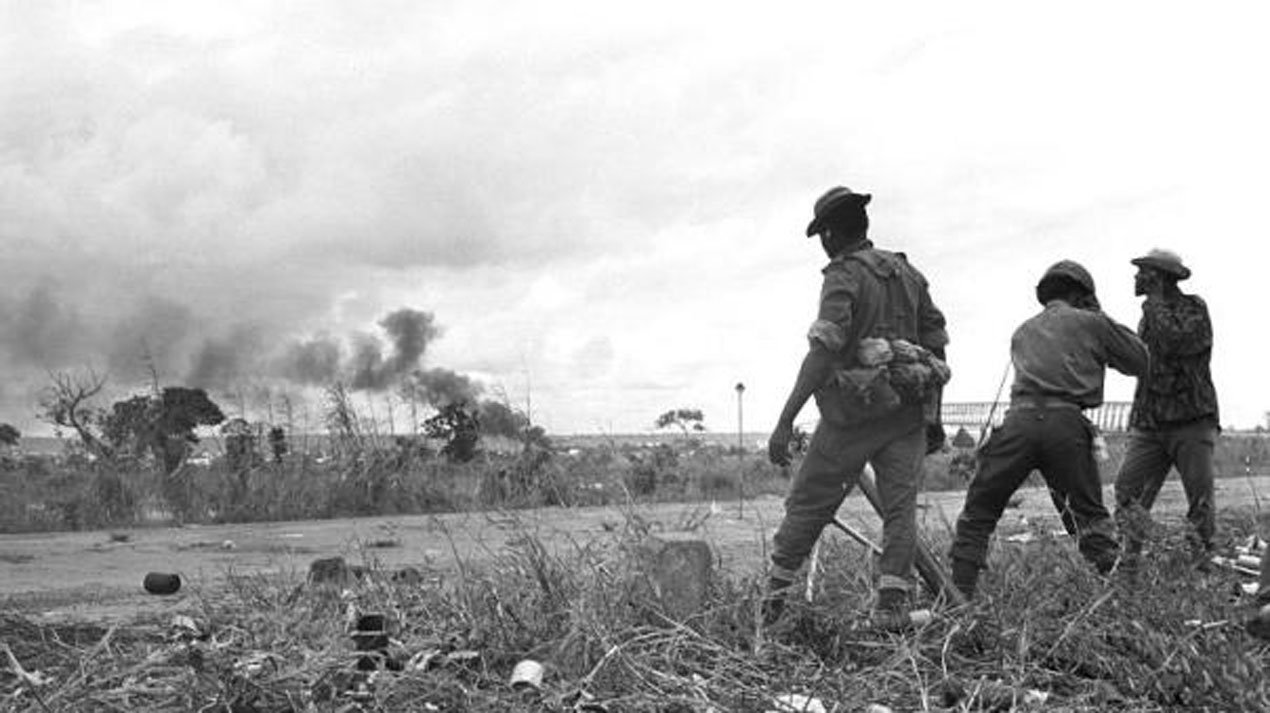
Again, it has been noted in several publications -which no one has refuted till today – that in August 1967, three months into the Biafran War, Biafran troops invaded the Mid-Western Region, to the west of the River Niger. They spread west, taking Benin City and reaching as far as Ore in the present day Ondo state.
The Federal troops however, gained the upper hand, and forced the Biafrans back to the Niger, where they crossed the bridge back into the Biafran city of Onitsha, which lies directly across from Asaba. The Biafrans blew up the eastern spans of the Onitsha Bridge, so that the Federal troops were unable to pursue them.
The Federal troops entered Asaba around October 5, and began ransacking houses and killing civilians, claiming they were Biafran sympathizers. Leaders summoned the townspeople to assemble on the morning of October 7, hoping to end the violence through a show of support for “One Nigeria.” Hundreds of men, women, and children, many wearing the ceremonial akwa ocha (white) attire paraded along the main street, singing, dancing, and chanting “One Nigeria.”
At a junction, men and teenage boys were separated from women and young children, and gathered in an open square at Ogbe-Osowa village. Orders were given, to open fire on them. The bodies of some victims were retrieved by family members and buried at home. But most were buried in mass graves, without appropriate ceremony. Many extended families lost dozens of men and boys. Federal troops occupied Asaba for many months, during which time most of the town was destroyed, many women and girls were raped or forcibly “married,” and large numbers of citizens fled, often not returning until the war ended in 1970.
Not even the re-emergence in May 1999, of democracy in the political topography called Nigeria could save the situation or change the narrative as a community in Bayelsa state incurred similar experience.
The Odi massacre was an attack carried out on November 20, 1999, by the Nigerian Armed Forces against the predominantly Ijaw town of Odi in Bayelsa state. The attack reportedly came in the context of an ongoing conflict in the Niger Delta over indigenous rights to oil resources and environmental protection. It is estimated that over 900 civilians were killed in the attack.
Before the massacre, twelve members of the Nigerian police were murdered by a gang in Odi, seven on November 4 and the remainder in the following days. In retaliation, the military decided to invade the village but there are reports that the army was ambushed close to the village thus tensions soared, they broke through the ambush and exchanged fire with armed militias in the village who were believed to be using the civilian population as cover. This and the “ambush” provocation led to the attack on the civilian population and the town’s buildings. Every building in the town except the bank, the Anglican Church and the health centre was reportedly burned to the ground. All of this happened in president Olusegun Obasanjo’s reign.
Before the dust raised by the Udi experience could settle, another was up. This time around, it has to do with the massacre of more than 100 civilians by Nigerian soldiers in several villages, between 20 and 24 October 2001, in Benue State, apparently carried out as revenge for the killing of 19 soldiers earlier in the month who according to official statements from the Nigeria military authority, were deployed to the area to restore law and order following clashes between the Tiv and Jukun ethnic groups. Benue and neighboring Taraba states, in central Nigeria, has been the scene of long standing disputes between these two groups.
Reacting to the ugly development, the New York based Human Rights watch reportedly lamented that “The security forces have a duty to protect, not to attack, the population,” said Peter Takirambudde, Executive Director of the Africa Division of Human Rights Watch. “The murder of the 19 soldiers should certainly be condemned, but their deaths do not justify the slaughter of civilians by the Nigerian army.”
Today, while the total number of victims remains unclear till date, eyewitnesses have reported that at least 100 and possibly more than 200 people died at the hands of the soldiers while thousands of people were displaced or fled the community for safety. The list is endless.
Undoubtedly, the truth is that as a people, we have journeyed through a path consistently without result. Yet, we have refused to make a detour. We have in the past, and presently, deployed on national issues an approach considered too unitary and devoid of process and outcome fairness.
This is terrible!
To therefore change the narrative and catalyze the process of building the Nigeria of our dreams, it is important that we first recognize as a nation that ‘the destiny of the ship is not in the harbor but in sailing the high sea’’ and so shall our collective responsibility be, not to destroy this great nation but join hands to nurture and sustain it. If we are able to develop the culture that seeks real victory via dialogue and not through conquest, it will again announce the arrival of a brand new great nation where peace and love shall reign supreme.
God Bless Nigeria!
Utomi Jerome-Mario is the Programme Coordinator (Media and Policy) at Social and Economic Justice Advocacy (SEJA), Lagos. He can be reached via jeromeutomi@yahoo.com/08032725374.



![Portable Orders Assault On Car Dealer Over Delayed Vehicle Delivery [VIDEO]](https://accesspost.ng/wp-content/uploads/2024/09/Portable-120x86.jpg)