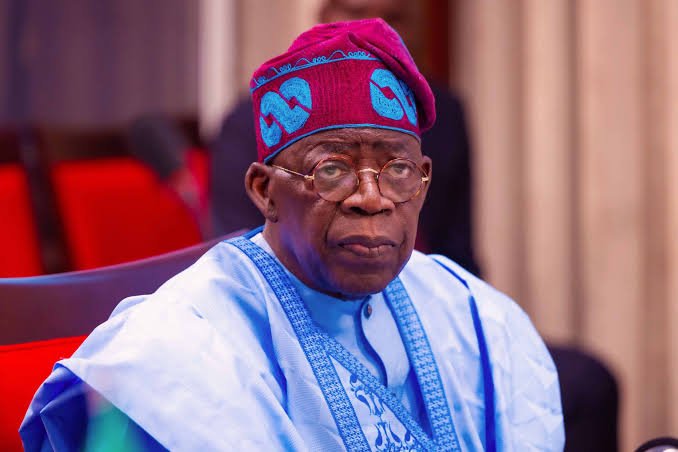
“The President must be told that these combative postures and potentially destructive actions of state actors will create more uncertainty in the business environment leaving local businesses and potential investors confused and weary of the Nigerian economy… reform fallouts are best addressed with civility, tact, and diplomacy”.
Mr. President must be facing a dilemma as his sweeping reforms, which he believes are necessary to rebuild the economy, bring dislocation and hardship and set the stage for social unrest and a prolonged domestic economic crisis.
This reform fallacy is predictable.
Reform implementation often throws up several unintended but predictable consequences, which would test the ingenuity of the policy makers.
The potential benefits of market-based reforms include opportunities for exports, and for Foreign Portfolio and Direct Investment flows which could facilitate economic expansion and propel progress toward Nigeria’s development goals.
However, since the unification of the exchange rates and elimination of subsidies on gasoline, an auspicious fiscal space seems to be the only visible, albeit significant, benefit.
All three tiers of government now have access to more resources from the FAAC.
This provides tremendous opportunities for the governors to deliver on their promises, including achieving the Sustainable Development Goals (SDGs), reducing poverty, re-building infrastructural facilities for growth, wealth, and jobs etc.
On the other hand, the reforms have brought difficult adjustments and are reshaping the economy in countless ways.
The Naira has been on a roller-coaster, with the exchange rate spiking to N1,700/$ in mid-February 2024 from N460/$ in May 2023.
Currency devaluation has elevated domestic inflationary pressures to almost two-decade high.
This is creating difficulties for businesses and elevating citizen’s levels of vulnerability and deprivation.
Despite large volumes of funds distributed amongst the three tiers of government, the pain and misery associated with the reforms have not abated.
There are pockets of protests in major cities around the country: Minna, Kano, Ibadan, Benin, Jalingo, and Lagos.
Our commodity and food markets are literally being raided by our neighbours because devaluation has weakened our currency relative to theirs and made our products cheaper and more attractive to them. They smile, whilst we cry.
What has been the response of the authorities to these difficulties and adjustments?
It appears that the authorities are both unable and unwilling to accept the recent developments in the economy as the predictable consequences of their attempt to implement an unrestrained open economy agenda.
The response has therefore been a cocktail of unorthodox actions and contradictory pronouncements which are unhelpful and capable of distracting the government from urgent and critical tasks.
There is also an impression out there that the government is in a panic mode and is unsure of what the next steps should be.
First, there are the conflicting statements, on the next steps, coming from the highest levels of government. The most alarming came from the Presidency. To ease the cost-of-living pressures on the populace, Mr. Vice President had hinted on plans to lift all restrictions on selected food imports, and to establish a National Commodity Board which will “continually assess and regulate food prices.” In fairness, the VP committed no crime. The first suggestion is a pretty standard inflation-mitigating measure while the second is a well-known campaign promise by the APC and features prominently in their Renewed Hope Agenda. That notwithstanding, these pronouncements were countered by Mr. President: “What I will not do is to set a price control board. I will not also approve the importation of food,” President Tinubu said at a meeting with 36 state governors, attended by the Vice-President.
There are other discordant tunes.
While the Minister of agriculture threatens to close Nigeria’s land border to stop cross border trade in agricultural products, the Housing Minster would do the opposite to facilitate the importation of cement.
The threat to close the border is obviously at variance with the President’s open economy agenda!
On the other hand, the pronouncement by the Housing Minister was made only weeks after Mr. President had foreclosed the idea of lifting restrictions on and opening our borders to facilitate food imports.
Does the Minister’s pronouncement signal a new direction?
Is the government prioritizing cement over food?
Second, the government seems to unduly politicize the issues at stake.
Cross border trading which has witnessed an upsurge in recent days is seen as the evil actions of ‘desperate politicians who lost 2023 elections.’
According to the Vice President, opposition politicians are ‘sabotaging the country by smuggling food out to other countries to trigger food price hikes.’
On the contrary, the surge in exports to the region is indeed a predictable consequence of Naira’s depreciation against the CFA.
The CFA/Naira rate had deteriorated from CFA/N0.7193 in January 2023 to CFA/N2.42. early this year, thus making local produce cheaper and more attractive to foreigners and consequently leading to an increased demand for exports.
Third, the authorities have adopted a coercive and combative approach, threatening ‘hoarders’ in the commodity markets and what the Minister of Information calls ‘speculators and other unscrupulous players within and outside the country who profit from dysfunction and opacity’ in the currency markets.
Mr. President must be so unnerved by the developments in the currency markets, that he approved the mobilisation of a 7,000-man ‘special taskforce to clamp down on dollar racketeers’, to ‘address exchange rate volatility’ and ‘to safeguard Nigeria’s FX market and combat speculative activities’.
Mr. President watches as state agents, including the EFCC and state-level anti-graft agencies deploy brute force, to ‘stabilise’ the currency and commodity markets by sealing warehouses and raiding stores and offices on a daily basis.
As I write, the executives of Binance have been reportedly arrested and are being detained by the EFCC on the orders of the National Security Advisor.
The EFFCC has been effectively turned into an armed wing of the CBN. It is the ‘monetary police’!
It seems Nigeria is on a journey back to 1984!
First, these discordant tunes and pronouncements in response to reform fallouts demonstrate either a lack of within-government consensus on the President’s reform objectives or insufficient understanding of same. If the President’s men don’t understand the reform objectives, who will?
Second, the President must be told that these combative postures and potentially destructive my actions of state actors will create more uncertainty in the business environment leaving local businesses and potential investors confused and weary of the Nigerian economy. He should be advised that such reform fallouts are best addressed with civility, tact, and diplomacy. Dealing with reforms aftershocks sustainably, requires thoughtful strategies and a comprehensive approach.
Third, government’s responses speak volumes about the readiness of our institutions to implement and monitor reforms as we transition from state controlled to market-based economy. I have argued previously that “The successful transition from state- to market-led growth goes beyond policy pronouncements. It requires, among others, a complete transformation of the public sector, which we all know is characterized by poor coordination, ……. and insufficient capacities and strategies for change.” The discordant tunes from the Ministers speak to this.
The speed with which Mr. President handles public sector reforms will determine the speed and outcome of his economic reforms.
Fourth, Mr. President should put in place a more robust economic policy architecture, with an Economic Management Team and a Council of Economic Advisors.
The latter should be made up of professionals from outside of the government with the requisite experience, exposure, and proper training on policy matters.
The Council shall be expected to offer what Mr. President needs urgently: neutral and independent advice on policy design, development, and implementation.
It seems like the government is only speaking and listening to itself.
The President’s newly formed Advisory Committee with Private Sector conglomerates as members, is at best a Consultative Forum and does not meet the criteria of neutrality and independence.
Besides, economic policy design isn’t the sort of thing that accepts all comers!
What the President needs is a body capable of providing analytical support for his fiscal and monetary authorities on the economy, across a wide range of areas, including formulation of the annual and supplementary budget, national development plan, investment, trade & industrial development as well as labour market and social development policies.
Finally, the government must strengthen its communications with citizens and manage their expectations about the form and longevity of government policy measures and responses: this could help in removing at least some of the anxieties and uncertainties faced by citizens and businesses.



![Portable Orders Assault On Car Dealer Over Delayed Vehicle Delivery [VIDEO]](https://accesspost.ng/wp-content/uploads/2024/09/Portable-120x86.jpg)